
Prospective homebuyers in British Columbia and Washington are discovering an unconventional path to home ownership: buying a recycled home. Instead of building new or purchasing an existing house on-site, this approach involves relocating a pre-loved house to a new location. Companies like Nickel Bros – specialists in structural relocation – make it possible to literally move a house from one place to another, giving it new life on a fresh plot. The idea may sound surprising at first, but it comes with a host of benefits for homeowners, the environment, and the community. Below, we explore the full spectrum of advantages – from cost savings and build quality to environmental impact and heritage preservation – that make recycled homes an appealing, forward-thinking choice.
What Is a “Recycled” Home (and How Does House Relocation Work)?
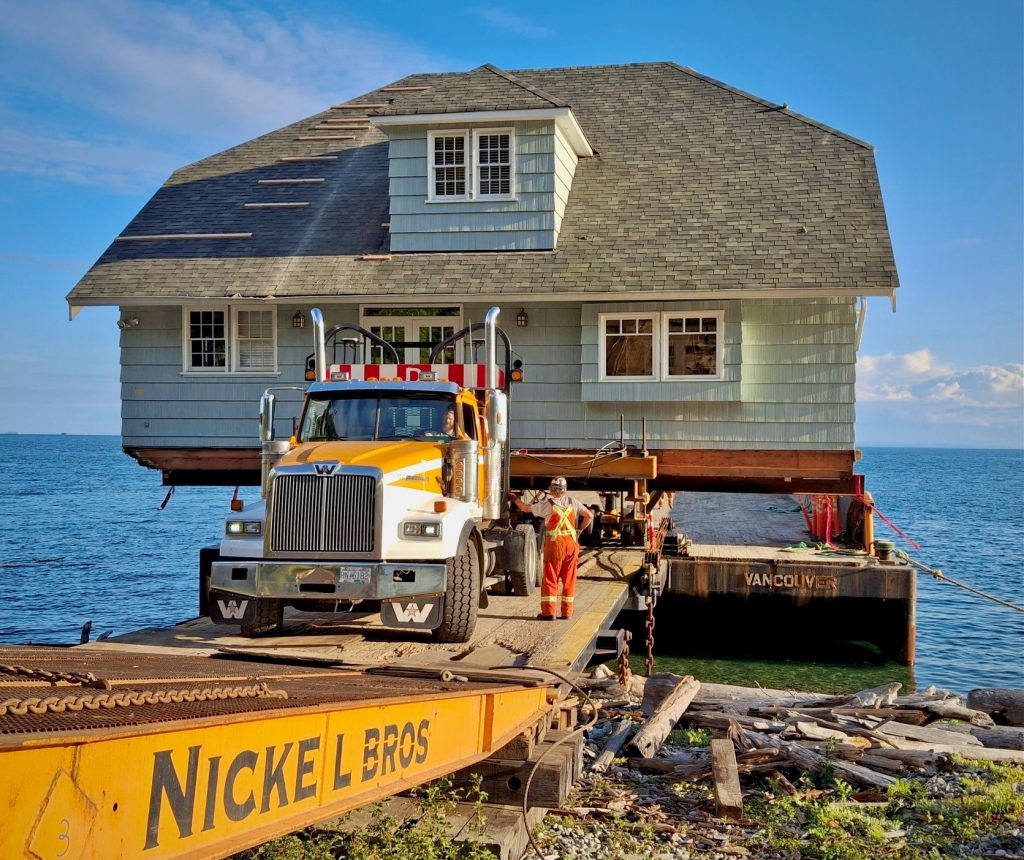
A recycled home is essentially an existing house that is saved from demolition and moved to a new site for reuse. In practice, structural moving experts carefully lift the house off its foundation and transport it (sometimes by road, sometimes by barge) to a new lot. This process is engineered and executed by professionals with specialized equipment, ensuring the building arrives intact and ready for a new chapter. Nickel Bros, for example, has been relocating houses and buildings in the Pacific Northwest since 1956, and has moved thousands of structures of all shapes and sizesnickelbros.com. Their team notes that “we save hundreds of quality homes from the landfill each year,” highlighting how many houses get a second life instead of ending up as wastenickelbros.com. In fact, almost any house can be moved if the logistics and route allow – from humble cottages to large historic buildings. For a homebuyer, this means you could purchase an existing house (often one that must be removed from its current land) and have it delivered to your own property. It’s a creative route to home ownership that skips the new construction phase entirely, offering some unique advantages.
Benefits for Homebuyers: Cost, Quality, and Quick Turnaround
One of the biggest draws of buying a recycled home is the potential cost savings. Because you’re reusing an existing structure, you avoid many of the material and labor costs of new construction. Moving an existing house can be dramatically cheaper per square foot than building a brand-new home. For example, one relocation expert estimates it costs roughly $75–$120 per square foot to move a home, whereas building new can cost about $200–$500 per square foot in British Columbiathetyee.ca. In other words, you might get the same size house for a fraction of the price by recycling an older home. It’s no wonder Nickel Bros promotes recycled houses as “better quality [at] half the cost” compared to new buildsnickelbros.com. The savings on construction can free up budget for renovations, upgrades, or other priorities.
Quality and character are another compelling benefit. Many recycled homes are older houses built in an era when different building materials and techniques were used – often to very high standards. As one industry veteran observes, “the best period of construction was at the turn of the century up to the mid-1970s… these buildings are all hand-nailed so they’re built like furniture.” Homes from past decades frequently feature old-growth timber (dense, strong wood that’s no longer available today) and craftsmanship that has stood the test of timethetyee.ca. In Metro Vancouver, it’s estimated that many pre-1970s houses were built with lumber from trees up to 2,000 years old, which speaks to the remarkable durability of their materialsthetyee.ca. When you buy a recycled home, you’re often getting a structure that has already proven its longevity – it’s lived through decades (if not a century) of use and can continue to serve for many years to come. This contrasts with some modern “quick-build” homes that, while brand-new, may not use the same caliber of materials. In short, a recycled house can offer solid construction and unique architectural character that mass-produced new houses might lack.
Homebuyers also appreciate the speed and certainty of this process. When you relocate a house, you bypass the lengthy stage of designing and building a new home from scratch. The house itself is ready – walls, roof, floors, and all – so once it’s moved and secured on a new foundation, much of the heavy work is done. Many buyers find it faster to prepare a lot and move in a recycled home than to endure a year or more of construction. Additionally, there’s a certain peace of mind in “what you see is what you get.” You can walk through the house in its original location and assess its layout and build quality before committing, rather than relying on blueprints or model homes. This can reduce the uncertainty that sometimes comes with new construction or custom builds. In essence, choosing a recycled home means a quicker path to move-in day and confidence in knowing the home’s existing character and quality.
Environmental Benefits: Waste Reduction and Carbon Savings
Perhaps the most inspiring advantages of buying a recycled home are the environmental ones. In a time of increasing awareness about sustainability, opting to reuse an entire house is like the ultimate form of recycling. Consider that when a typical house is demolished, all of its materials – wood, drywall, concrete, glass, etc. – usually end up in the landfill. By contrast, relocating a house keeps those materials in use and out of the waste stream. Nickel Bros alone moves between 150 to 300 houses each year in the region, which diverts an estimated 21,000 tonnes of would-be waste from landfills annuallythetyee.ca. Each relocated home is one less pile of debris and construction junk taking up space in a dump.
Moreover, reusing a house preserves the natural resources that would have been consumed to build a new one. Think of all the lumber, concrete, and steel that a new construction requires – by saving an existing home, you save those resources for another day. For instance, one analysis found that keeping and reusing a single house saves around 200 trees that would otherwise be cut down (about 80 trees already embodied in the house and 120 that would have been needed for a new build)thetyee.ca. That’s an enormous environmental saving in terms of forests and wood supply. It also means the energy and emissions that would go into manufacturing new building materials are avoided. Construction and
building materials account for a significant share of carbon emissions worldwide, so avoiding a new build can make a real difference. In fact, environmental experts note that “the greenest building is one that already exists.” Retrofitting or relocating an existing house can save over 68% of the embodied carbon compared to constructing a new home of the same sizeweforum.org. This is because the “embodied” carbon – all the CO₂ emitted to produce and transport materials like cement, bricks, lumber, and steel – has already been spent in the old house. By reusing the structure, we prevent a huge amount of new carbon emissions that a new construction would generate.
To put it simply, choosing a recycled home is an eco-friendly decision that tackles waste and climate impact head-on. It’s a way of saying no to the throwaway culture of tear-downs and yes to making the most of what we’ve already built. Even municipalities are encouraging this: the City of Vancouver, for example, has bylaws pushing for reuse of materials from demolished homesthetyee.ca, recognizing that 40% of local landfill waste comes from construction and demolition debristhetyee.ca. Relocating a whole house goes even further – preserving all that material in one go. As Nickel Bros puts it, “homes shouldn’t be treated like garbage,” and their greatest environmental impact comes from relocating “quality recycled houses” insteadnickelbros.com. Every recycled home is essentially a large-scale act of recycling, with benefits measured in tons of waste avoided and tons of CO₂ emissions saved.
Preserving Heritage and Strengthening Communities
Beyond the personal and environmental perks, recycled homes offer social and community benefits that are harder to quantify but deeply felt. When you save an old house, you’re often saving a piece of local history or character. Many houses slated for demolition have unique architectural styles or stories; by relocating and reusing them, we preserve that heritage for future generations. A great example of this is the recent move of a 98-year-old fire hall at the University of British Columbia. Rather than demolish this 1920s-built fire station during campus redevelopment, it was carefully relocated to a new site so that its historic brick facade and iconic hose tower will live on as part of a new project. UBC undertook this move specifically to “preserve its heritage for future generations”news.ubc.ca. The operation was equal parts engineering feat and act of conservation – keeping an old landmark in the community fabric instead of losing it forever.
Every recycled home carries a bit of heritage with it, even if it’s not a famous building. Imagine rescuing a classic 1940s craftsman house from a neighborhood where it’s no longer wanted and bringing it to a community that appreciates its charm. You’re not just acquiring a house – you’re continuing its story and maybe even inspiring your neighbors to see value in older homes. New owners of relocated houses often speak of the satisfaction in giving a beloved home a “second life.” There’s a human aspect too: it might be a family’s cherished home that’s been saved from the wrecking ball and passed on to another family. As one homeowner who recycled her house put it, “I absolutely do not believe in wasting a perfectly good house.”thetyee.ca This sentiment is shared by many who choose house relocation. Instead of the sadness of seeing a solid old home smashed to rubble, there’s the joy of seeing it roll down the road to a warm welcome elsewhere.
Two houses being relocated via barge from Greater Victoria, BC, to new communities on nearby islands in 2023. Moves like these give houses a second life as family homes while keeping perfectly good structures out of the landfill.
Communities also benefit in practical ways. Recycled homes can provide affordable housing opportunities in areas where building new might be prohibitively expensive or slow. For instance, in one late-night operation on Vancouver Island, two modest houses were loaded onto a barge and shipped off to become new homes for families on Lopez and Texada Islandssaanichnews.comsaanichnews.com. Those island communities gained ready-made houses without the cost and effort of new construction, and the originating community saw old houses removed without sending them to the dump. It’s a win–win scenario: one less house wasted here, one more house for use over there. Furthermore, by preserving older homes, neighborhoods retain a mix of architectural styles and a sense of continuity with the past. There’s social value in not turning every block into a clone of all-new buildings. House recycling honors the history and identity of a place, whether that means keeping a century-old farmhouse in the rural landscape or relocating a mid-century bungalow to a town that appreciates its retro character.
Finally, the very act of recycling houses sends a positive message about sustainable development and community values. It demonstrates creativity and responsibility – showing that our communities care about reducing waste, valuing craftsmanship, and helping each other. Local heritage societies and environmentally conscious groups often applaud these moves, seeing them as alternatives to the cycle of tear-down and rebuild. And it’s not just nostalgia; it’s practical, too. As one Nickel Bros representative said while moving a 1948 home in Victoria, “It has way too many years left in it to see it go away in a dumpster.”saanichnews.com By choosing a recycled home, homeowners are investing in that principle – that good buildings deserve to keep serving people, rather than be thrown away. This ethos strengthens community bonds and sets an example of sustainability that goes beyond one house, inspiring others to think creatively about reuse.
A New Home with a Story and a Future
Buying a recycled home is more than a real estate decision – it’s a statement about what we value. It combines personal benefit with environmental stewardship and community-minded preservation. Homebuyers in B.C. and Washington who take this route often find that they get a great house at a great price, skip months of construction noise and headaches, and feel proud knowing their beautiful new home didn’t require cutting down forests or filling up a landfill. At the same time, they carry forward a piece of architectural heritage, adding a rich story to their new dwelling. The process is made possible by specialists in structural relocation like Nickel Bros, whose role in handling the heavy lifting (quite literally) enables home owners to reap these rewards. As Nickel Bros’ motto says, “our purpose is to re-purpose,” and that vision is reflected every time a house is spared from the wrecking crew and delivered to a grateful new ownernickelbros.com.
For anyone early in the decision-making process, the idea of a recycled home opens up exciting possibilities. It’s an approach that checks all the boxes: financially smart, environmentally green, and socially conscious. While it may not be the conventional path, it’s gaining traction in the Pacific Northwest as more people recognize the value of what already exists. The next time you see an old house scheduled for demolition, remember that it might just have another chapter left to write – perhaps as your future home, full of character, savings, and purpose. By choosing a recycled home, you’re not only building your future, but also honoring the past and helping build a more sustainable world, one moved house at a time.